So, you’re telling me I CAN do yoga at 65?
I’m not flexible, I can’t do yoga!
I’m too old to do yoga!
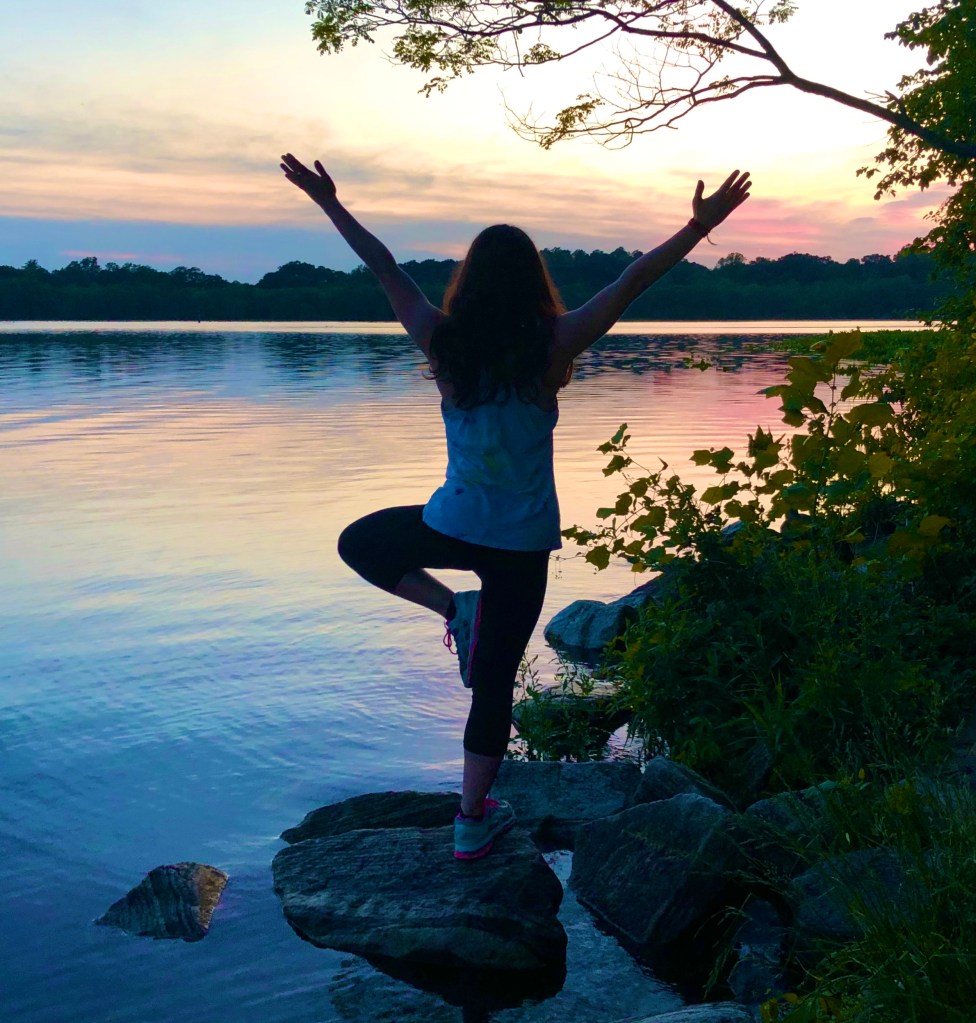
When I meet someone new and they find out I teach yoga, they always say one of two things, either “I’m not flexible, I can’t do yoga” or “I’m too old to do yoga”. As a registered yoga teacher (RYT-200) and a gerontologist, those two statements leave me wanting to prove them wrong.
Here’s my story:
Growing up, every other year my mom would take my brother and I to visit our grandmother in Argentina. We would enjoy the beautiful sights, smells, and sounds of Buenos Aires and the nearby towns. My Tio (uncle) Sergio would help us get a real taste of what life was like there – not just the tourist traps. I remember when I was about 13 years old, I went to my first yoga class with my Tio. It was a small room with large windows that made us feel so connected to the beauty of nature just outside. My Tio gave me a mat and I tried so hard to follow along with the class. I remember thinking “I can’t do this s***” – you know, teen angst. The only part I remember kind of liking was the end, the savasana or final resting pose. We laid on our mats in silence and it was so peaceful that I probably took a little nap. Next thing I know my Tio is nudging my arm and telling me it was time to go.
Years past and I did not re-discover yoga until my first year of undergraduate school at the University of Maryland, Baltimore County (UMBC). There was a lovely Women’s Center that was open to everyone including anyone of any orientation or gender. They offered a safe space to read, pump breast milk, talk about life’s problems and successes, and grab free condoms. There were also free yoga classes available for every level. I was intrigued and started to go by myself and with friends (and my now husband). It left me feeling so relaxed at the end of class – I was able to forget about all of life’s problems when I was practicing yoga. That was when I fell in love with the practice and started to learn more about it.
So why should you give yoga a try?
Some of the benefits of yoga include:
- Improved blood flow
- Decreased stress
- Increased lung capacity
- Improved balance and the reduction of the fear of falling in older adults
- Higher states of awareness and insight
- Increased flexibility
- Improved posture and alignment
- Improved mental focus and clarity
- Physical and mental strength
Potential risks:
If not practiced cautiously, various poses may irritate already existing conditions. If you get so excited to try a new posture or try to do it without warming up or any other postures to get ready, you may injure yourself. You know your body better than anyone else, so it is always best to be gentle on yourself. Injury with yoga is not very common when you are being taught by a well-trained instructor. It is also advised that if you have any chronic medical conditions that you should speak with your healthcare provider before trying something new like yoga.
What IS yoga anyway?
Yoga is a practice of joining the mind, body, and spirit. It originated in India and was brought to the West around the 20th century, where it gained popularity for being a form of exercise and stress relief. The word “yoga” comes from the word “yoke” which means union or together in union with the Divine. One of the oldest texts on yogic philosophy was written by the great Indian sage Patanjali, it is called the “Yoga Sutras”. This text includes ancient information on how to control the mind and the emotions, and how to grow spiritually.
There are many different styles of yoga, which means that there is something for everybody. Some examples of these are:
- Restorative yoga – A few poses that can be completed using props like bolsters, blankets, straps, and blocks to get into very relaxed positions
- Chair yoga – Poses that have been adapted to complete with a chair
- Hatha Yoga – Introduction to basic yoga poses or “asanas”
- Kundalini yoga – Meditation, breath work or “pranayama”, and asanas completed to release energy
- Bikram yoga – Consisting of 26 poses and 2 breathing exercises that are completed in a heated room with temperatures around 105 degrees.
Beginner’s yoga routine – Easy and safe!
Below is a beginner friendly chair yoga sequence that I taught recently for a group of office staff (with ages ranging from 30 to 70.) You should use a sturdy chair such as a dining room chair with a solid foundation.
30-minute Chair Yoga Sequence
- Begin by sitting comfortably in a chair with feet planted on the floor and hands resting on your thighs with palms facing up.
- Gently close the eyes, and start to focus on your breathing – ask yourself, how does your body feel? Is there tension in the shoulders or neck? Do you feel tightness in the hips? Acknowledge any sensations in the body.
- Start to deepen the breath, inhaling and exhaling slowly through the nose.
- With eyes still closed, begin 4, 7, 8 breathing – inhale through the nose for a count of 4 seconds, hold the breath for 7 seconds, slowly and with control exhale through the nose for a count of 8 seconds. Repeat two more times for a total of 3 rounds, or more if desired.
- Pause and notice your body now and the changes that have occurred from this simple breathing exercise. Set an intention for this practice – maybe it is to bring calmness and peace into your life, or to bring forth more kindness and compassion to others. Whatever it is, think about your intention and then slowly start to blink open the eyes.
- Start with warms ups, making sure to inhale and exhale through the nose throughout exercises.
- With arms out in front of you, start to roll the wrists in clockwise and counterclockwise rotations about 5-10 times.
- With legs slightly lifted off the floor, roll the ankles in clockwise and counterclockwise rotations about 5-10 times.
- Neck rotations – Gently drop the head and neck back so that your gaze is up towards the ceiling, start to rotate in a clockwise direction by bringing head toward your left shoulder and then chin towards chest. Continue with rotations, then switch to counterclockwise. Completing about 5 rotations each direction.
- Leg lifts
- Place hands on either side of the chair seat next to the thighs. With knees bent, bring one knee up at a time as high up as you can, then return the foot back to the floor.
- Complete about 10 lifts per leg.
- Forward bend
- Option 1: Stand up in front of chair and fold forward at waist to place hands on shins, ankles or floor.
- Option 2: Staying seated in chair, fold forward to place hands on shins or ankles.
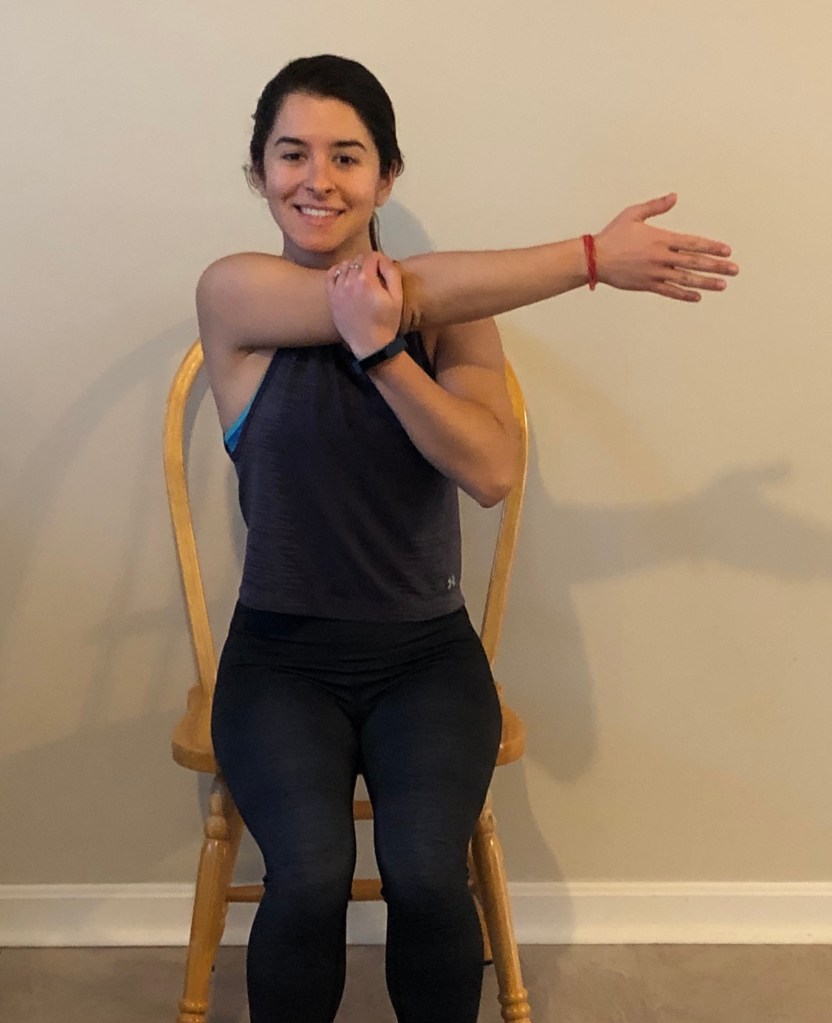
- Cross body shoulder stretch (in chair or standing)
- Bring right arm across the body at shoulder height. Right hand should be on other side of the body, with arm extended.
- Bend left arm at elbow.
- Place left hand under right arm, supporting right above the elbow.
- Use left forearm to gently pull right arm across the body into the chest, until you feel a stretch in the shoulder.
- Hold for at least 20 second and repeat with the other arm.
- Cat-cow
- Seated in chair, place hands on thighs, begin with neutral spine posture.
- Inhale, expand the belly, open the chest, gaze up at the ceiling.
- Exhale, belly to spine, curving the spine and gazing at the floor.
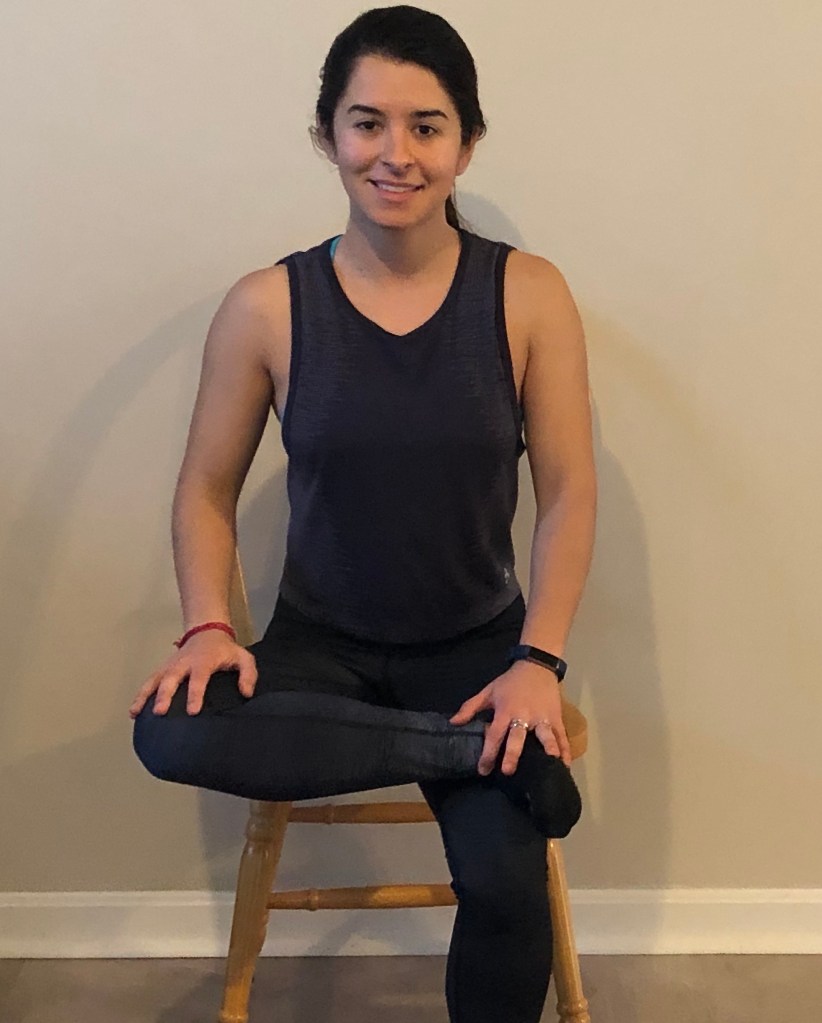
- Seated figure 4 stretch
- Start with both feet on floor.
- Bring right ankle up and place on the left thigh.
- Gently press on the right inner thigh or knee down towards the floor until you feel stretching in the pelvic area.
- Repeat on the left side.
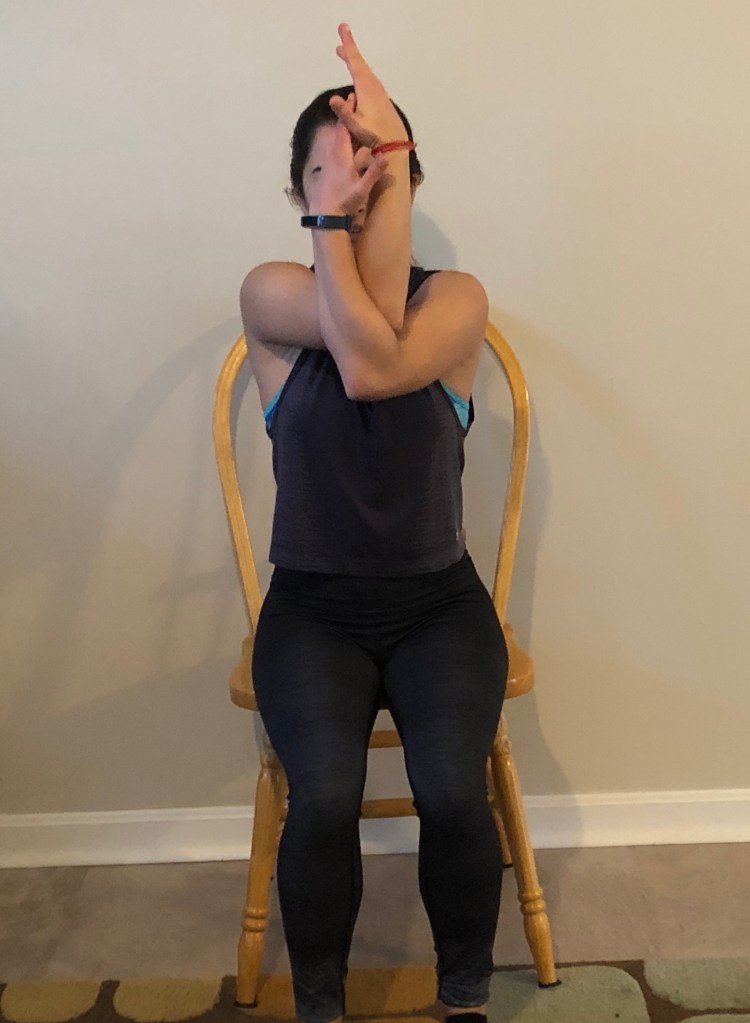
- Eagle arms
- Inhale and lift arms to either side of the face, palms facing inward.
- Exhale, dropping arms to shoulder height, with arms crossing, give yourself a hug.
- Cross right arm under the left.
- Try to align left elbow to sit in the crook of the right elbow.
- If possible, touch hands together.
- Repeat with left arm crossed under the right arm.
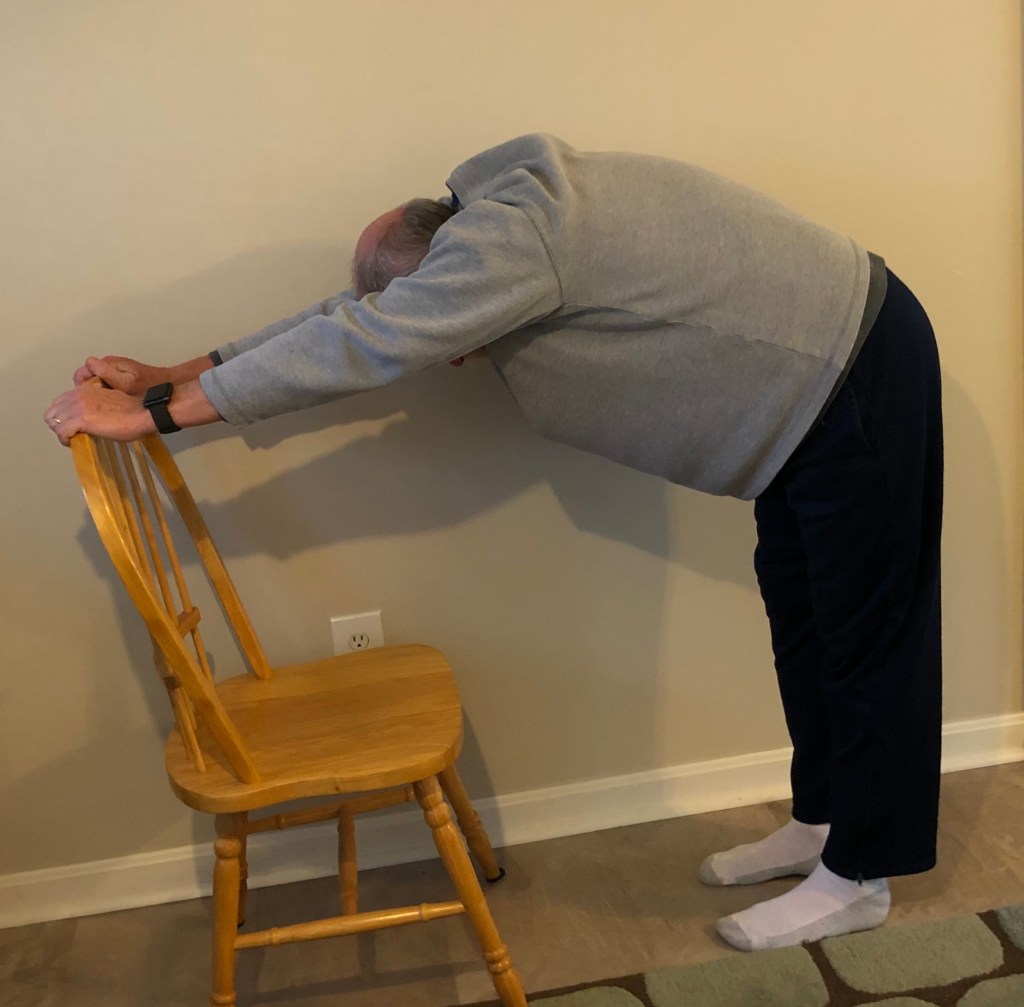
- Down dog with chair
- If possible, place chair against a wall with back of chair touching the wall so chair does not move when completing this pose
- Stand a couple feet in front of chair and start to bend forward at the waist, maybe placing a small bend in the knees
- Place hands on seat of the chair or on the back of the chair
- Walk the legs back for more of a stretch
- Head should be between the arms and in line with spine
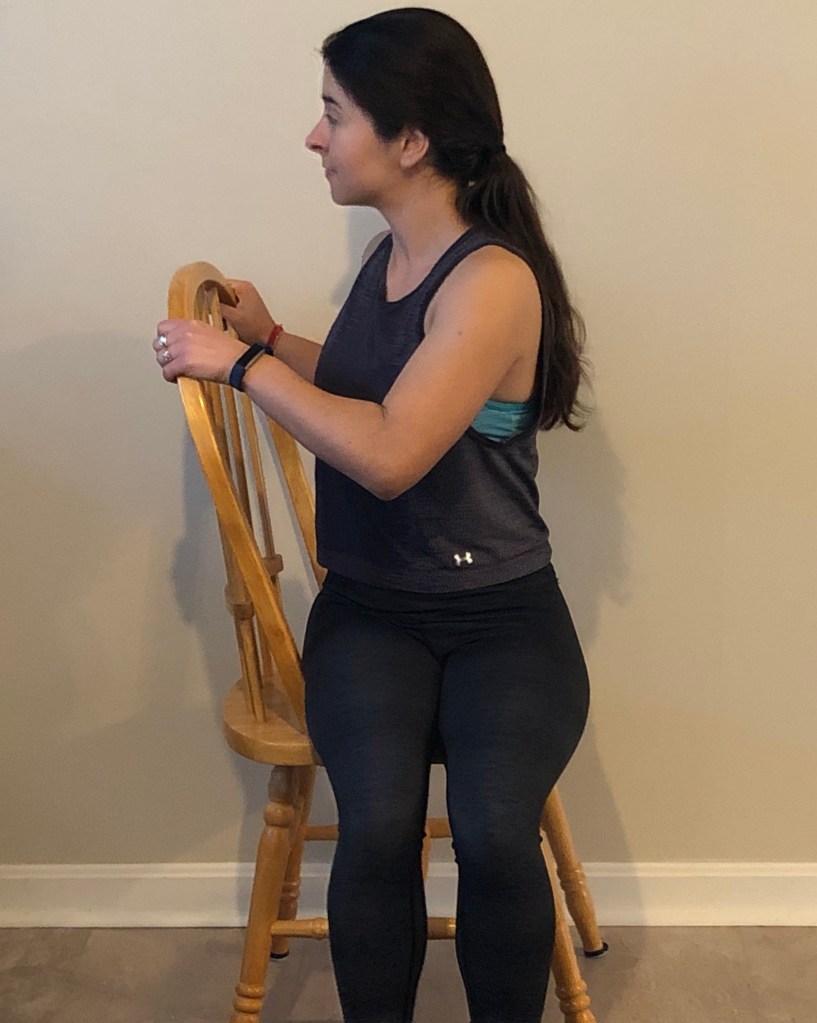
- Seated twist
- Sit sideways in the chair with left hip pressing the back of the chair
- Feet and knees should be parallel to one another
- On the next exhale, turn to the left to grab the chair back with left and right hands
- 4-6 breaths here and then repeat on the other side
- Savasana or final resting pose
- Close eyes, place hands on top of one another over the heart.
- Inhale and exhale slowly and notice the sensations in your body.
- Feel the heartbeat and relax the body. Pause.
- Thank yourself for making the time to practice today.
- Gently blink open the eyes.
Think about how you felt before practicing the chair yoga sequence, and how you feel after completing it. Was there a change that you noticed?
No matter what age you are, yoga certainly has many benefits that can improve one’s quality of life. I challenge you to give it a try today.
Elizabeth Sebastiao, MS, RYT-200
Elizabeth is a registered yoga teacher with the Yoga Alliance. She holds a Master of Science in Gerontology from Towson University and has a passion for working with older adults. Her interests and hobbies include dancing, yoga, camping, and community health.
 Next Life Retired